• Welcome to your new Gnomio site

    Now, you are in control!

    Moodle is an open-source Learning Management System (LMS) that provides educators with the tools and features to create and manage online courses. It allows educators to organize course materials, create quizzes and assignments, host discussion forums, and track student progress. Moodle is highly flexible and can be customized to meet the specific needs of different institutions and learning environments.

    Moodle supports both synchronous and asynchronous learning environments, enabling educators to host live webinars, video conferences, and chat sessions, as well as providing a variety of tools that support self-paced learning, including videos, interactive quizzes, and discussion forums. The platform also integrates with other tools and systems, such as Google Apps and plagiarism detection software, to provide a seamless learning experience.

    Moodle is widely used in educational institutions, including universities, K-12 schools, and corporate training programs. It is well-suited to online and blended learning environments and distance education programs. Additionally, Moodle's accessibility features make it a popular choice for learners with disabilities, ensuring that courses are inclusive and accessible to all learners.

    The Moodle community is an active group of users, developers, and educators who contribute to the platform's development and improvement. The community provides support, resources, and documentation for users, as well as a forum for sharing ideas and best practices. Moodle releases regular updates and improvements, ensuring that the platform remains up-to-date with the latest technologies and best practices.

    Links of interest:

    (You can edit or remove this text)

Available courses

A Child Welfare Programme is a coordinated system of services, policies, and interventions designed to ensure that children grow up in safe, stable, and nurturing environments. Its primary mission is to protect children from abuse, neglect, and exploitation while strengthening the capacity of families to care for them.

In modern practice, child welfare has shifted from simply "removing children" to a family-centered approach that prioritizes keeping families together whenever safely possible.

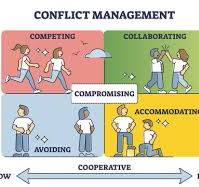
Conflict is an inevitable part of human interaction, whether it’s a dispute over a desk in an office or a multi-national trade war. While we often view it as "bad," conflict is actually a neutral signal that something needs to change.

The difference between a disaster and a breakthrough lies in how the situation is handled: through Resolution or Management.

Advocacy and Lobbying are about the art of persuasion. While people often use the terms interchangeably, they represent two different levels of influence in the world of policy and social change.

Think of it this way: Advocacy is the marathon (building broad support), while lobbying is the sprint to the finish line (passing a specific law).

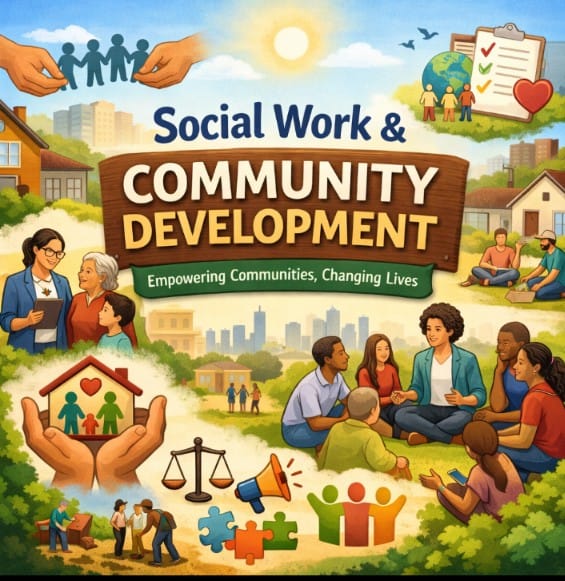
Social Work and Community Development

This course introduces students to the principles and practices of social work, focusing on improving individual and community well-being. Students learn how to assess social problems, provide support, and implement interventions that empower vulnerable populations. The course covers topics such as human behavior, social policies, community engagement, ethics in social work, and strategies for sustainable development. Through practical exercises and case studies, learners develop skills in counseling, advocacy, and resource mobilization, preparing them for careers in social services, NGOs, and community-based organizations.